12-240/Classnotes for Tuesday October 23: Difference between revisions
From Drorbn
Jump to navigationJump to search
(→=) |
No edit summary |
||
| Line 1: | Line 1: | ||
{{12-240/Navigation}} |
{{12-240/Navigation}} |
||
= === |
|||
Definition: L(V,W) is the set of all linear transformation L: V->W |
Definition: L(V,W) is the set of all linear transformation L: V->W |
||
Revision as of 15:20, 30 October 2012
| |||||||||||||||||||||||||||||||||||||||||||||||||||||||||


==
Definition: L(V,W) is the set of all linear transformation L: V->W
u [math]\displaystyle{ \in\,\! }[/math] V, 0 of L(V,W) (u)=0 of W (this is a l.t.str)
If L1 and L2 [math]\displaystyle{ \in\,\! }[/math] L(V,W), (L1 + L2) (u)= L1(u) +L2(u) (this is a l.t.str)
If c [math]\displaystyle{ \in\,\! }[/math] F and L [math]\displaystyle{ \in\,\! }[/math] L(V,W), (c*L) (u)= c*L(u) (this is a l.t.str)
Theorem: L(V,W) is a vector space
Lecture notes scanned by Zetalda
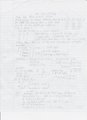
Page 1
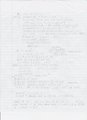
Page 2
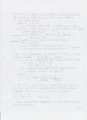
Page 3
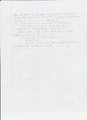
Page 4


